Five minutes to set up, then the whole night
The night of 3 to 4 November: the gap in the cloud came when the forecasts said it would, setting up took under five minutes, and the telescope ran by itself until dawn while I slept. Triangulum, Andromeda and a supernova in NGC 3310, and no new stars.
Shot 3 to 4 November, between 00:20 and 05:25, a back garden in Northern Ireland.
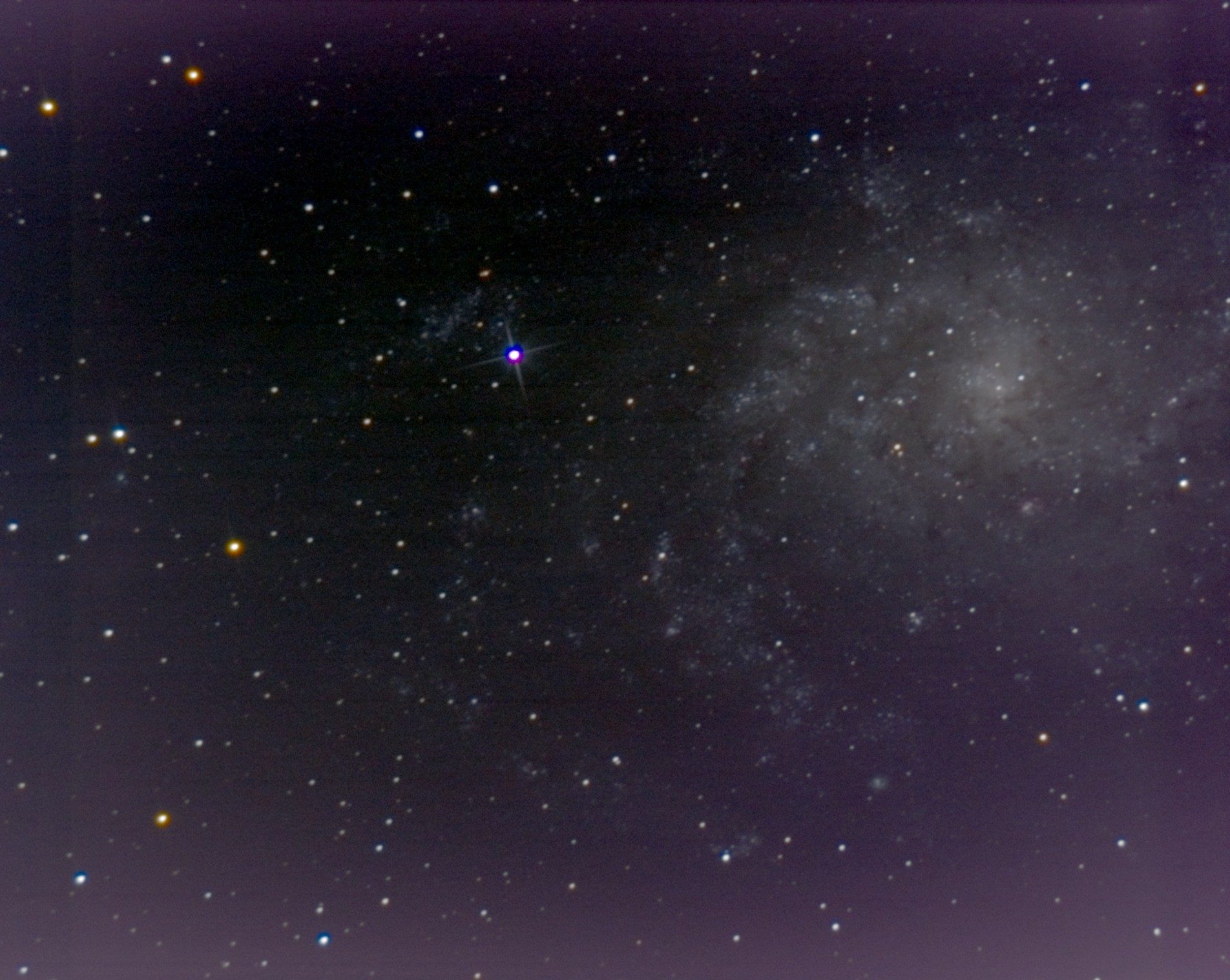
The Triangulum Galaxy (M33), 37 minutes of 16-second frames, 138 of the 180 taken.
The gap
The forecasts didn’t agree. Of the four big weather models, the Met Office had rain at midnight and cloud until two, while the European, German and American ones all had it clearing from about one. Three out of four was enough to go out for. Claude added a command that sets the four forecasts side by side, so next time the comparison takes one line.
I was set up and waiting about half an hour before it, and the gap turned up exactly when they said it would, which was a pleasure to watch. Once it held, setting the mount’s clock, checking focus and checking the polar alignment took under five minutes. Focus was already as good as it usually gets, and we started.
While we waited for the cloud, the live stream showed a card in place of a picture of cloud. It listed the setup steps, crossed off as each was done, and what the night was hoping to find if the sky cleared.
The night
The plan was a second look at a spot in Andromeda that had turned up on earlier nights, a nova search of Triangulum, a nova search of Andromeda’s core, then Andromeda’s eight outer panels and a supernova to finish. A band of cloud crossed at about half one and cost a few frames. I went to bed at three, sky clear apart from the odd cloud, and left Claude in charge. Nothing needed me again. The telescope parked itself at the end and messaged my phone.
The camera still has its habit of sometimes not sending a frame. It did it about forty times, and each time the run waited and tried again, and went on.
The searches
Nothing new this time. The searches compare each night’s picture with a reference picture of the same field and flag any star that wasn’t there before. They flagged about fifteen spots worth a look. Claude went through every one. Most were plainly things the comparison itself leaves behind, and the few left open are too faint to call either way. Three in one of Andromeda’s panels came from a patch of its reference picture that flags spots every night. Six there, from this night and two October nights, are now closed.
The spot in Andromeda that we went back for wasn’t there this time. It has now been seen on two nights out of four, which is less convincing than it was.
A search of an older night’s frames turned up one more spot, near Tabby’s star, the one famous for its strange dips. It’s most likely leftover light beside a brighter star, but one more clear night on that field will settle it.
The supernova
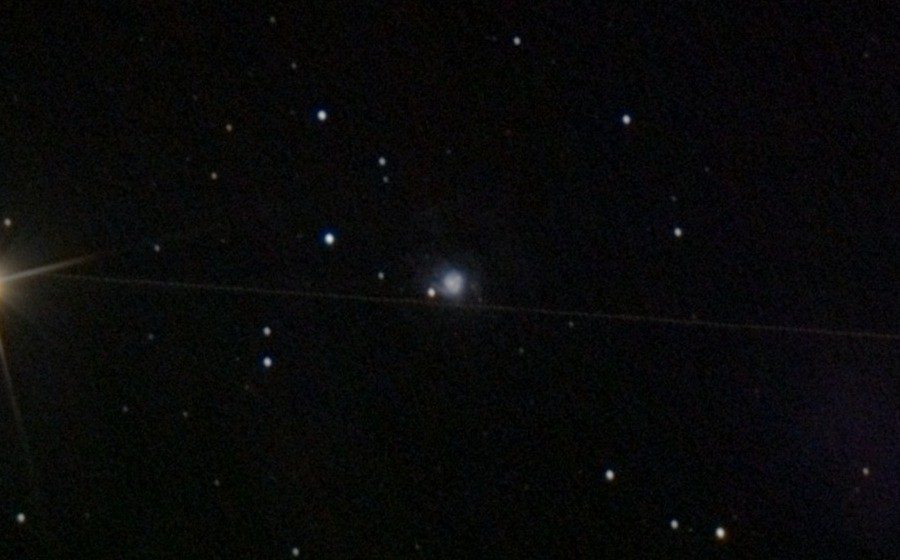
NGC 3310, 8 minutes of 16-second frames, with a satellite trail across it.
NGC 3310 is a small, busy galaxy in Ursa Major, and since July it has had a supernova, SN 2026sqf. It’s an unusual kind, a white dwarf exploding into gas the star had shed beforehand. At its peak it reached magnitude 11.2. It’s now around 13, too close to the galaxy’s bright middle to pick out at this size. This first night gives a picture to compare later nights against, as it fades.