Meanwhile, in space
The universe is getting on with things. Here’s what it’s up to tonight, and whether you can see any of it from where you are.
Tonight, Tuesday 3 November
Clear spells tonight: 7:00 pm to 8:00 pm. (2 of 4 centres clear it at best)
- GoodA quick looka clear hour or more
- GoodThe Moon and planetsclear, and the air steady
- PossibleBright clustersshort clear spells
- PoorFaint galaxiesthe Moon is 25% lit and up for 3.2 hours of the dark
- Properly dark from 7:00 pm to 5:30 am.
- The Moon is 25% lit and waning, rising at 2:18 am and setting at 2:34 pm: up for 3.2 hours of the dark.
- Your sky: about Bortle 3 (21.8 mag/arcsec²), from a light-pollution atlas for this 11 km square. A model, not tonight's measurement.
- 7:00 pm: 2 of 4 centres clear; best spell
- 8:00 pm: 1 of 4 centres clear
- 9:00 pm: 1 of 4 centres clear
- 10:00 pm: 1 of 4 centres clear
- 11:00 pm: 0 of 4 centres clear
- 12:00 am: 0 of 4 centres clear
- 1:00 am: 0 of 4 centres clear
- 2:00 am: 0 of 4 centres clear
- 3:00 am: 0 of 4 centres clear; Moon up
- 4:00 am: 0 of 4 centres clear; Moon up
- 5:00 am: 0 of 4 centres clear; Moon up
3/4 means three of the four forecasting centres call that hour clear; green is clear by most of them · ☾ the Moon is up · outlined: the best clear spell · scroll for later hours →
Each hour shows how many of four forecasting centres (Met Office, ECMWF, DWD ICON, NOAA GFS) call it clear, for this 11 km square. Forecasts fetched 1:12 pm. Not street-level: the models’ own grids are 2 to 25 km.
In short: the night of Tuesday 3 November 2026 over Columbus, US (times America/New_York). Clear spells tonight: 7:00 pm to 8:00 pm. Good tonight for a quick look, the moon and planets. The Moon is 25% lit and up 3.2 hours of the dark. Best night this week for faint galaxies: Sunday 8. Sources: four forecasting centres through Open-Meteo, 7Timer for seeing, a light-pollution atlas, positions worked out here. Updated 1:40 pm. Forecasts change; treat anything beyond three days as a guide.
What’s different tonight
- The Moon is up 1.1 hours less of the dark than last night: the darker skies are coming back.
- Southern Taurids: look Thu 01:00.
Worth stepping outside for
Planet · eyes
Mars
Best at 6:35 am, 65° up in the south. A bright, steady point.
Planet · eyes
Jupiter
Best at 6:35 am, 62° up in the south-east. A bright, steady point that binoculars show is a disc with moons.
Planet · eyes
Saturn
Best at 10:15 pm, 51° up in the south. A bright, steady point.
Meteor shower · eyes
Southern Taurids
Peaks around 5 November. From here, about 6 an hour at best, best from 8:00 pm to 12:50 am. Source: IMO.
Meteor shower · eyes
Northern Taurids
Peaks around 12 November. From here, about 5 an hour at best, best from 7:40 pm to 12:50 am. Source: IMO.
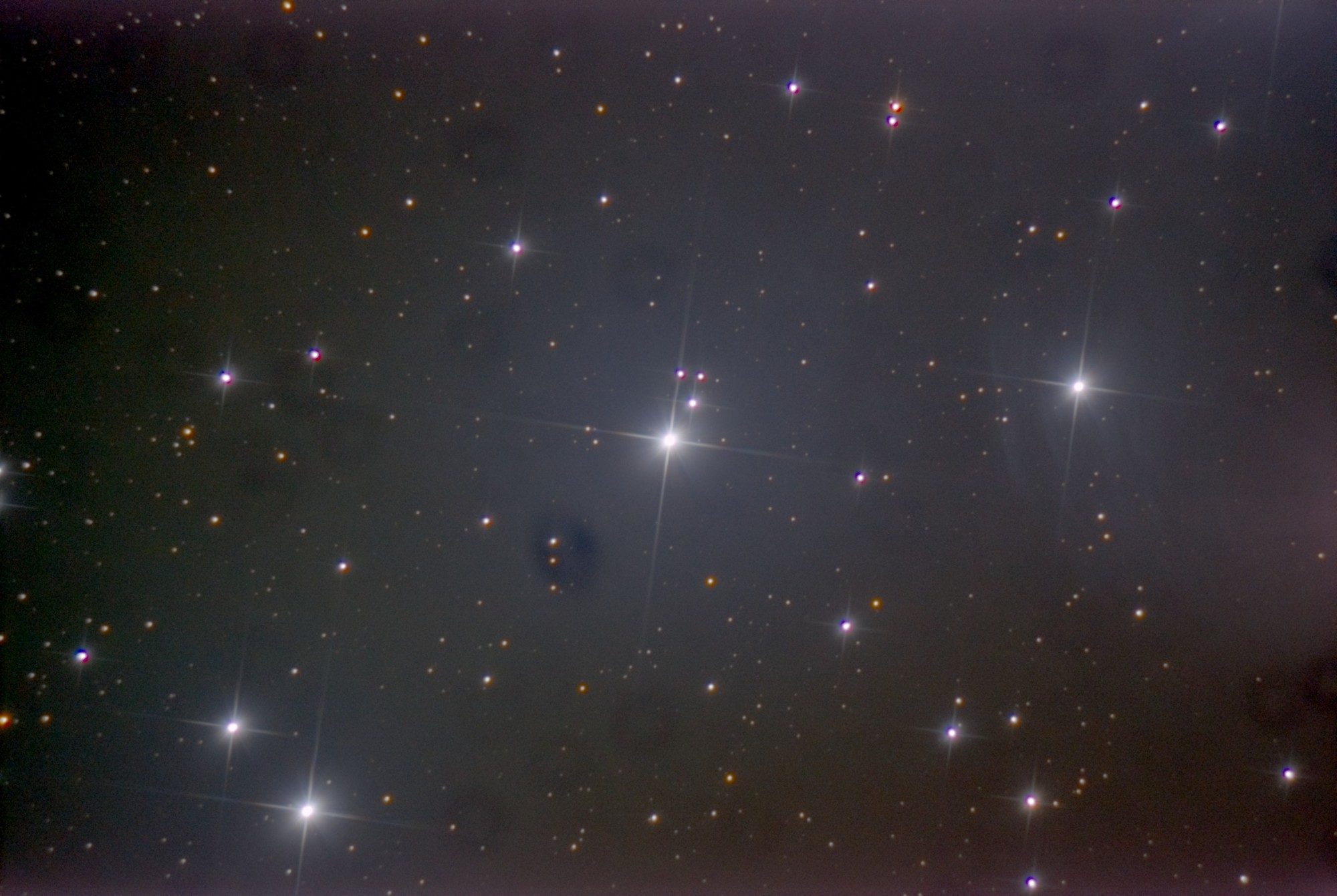
What my 150 mm telescope and a small camera got from a back garden, 13 October 2026. Your eyes will see far less. In the diary Open cluster · eyes
Pleiades (M45)
A family of young stars about 440 light years away, born together about 100 million years ago.
Six or seven stars to the eye; binoculars turn it into dozens.
Best at 10:55 pm, 54° up in the east.
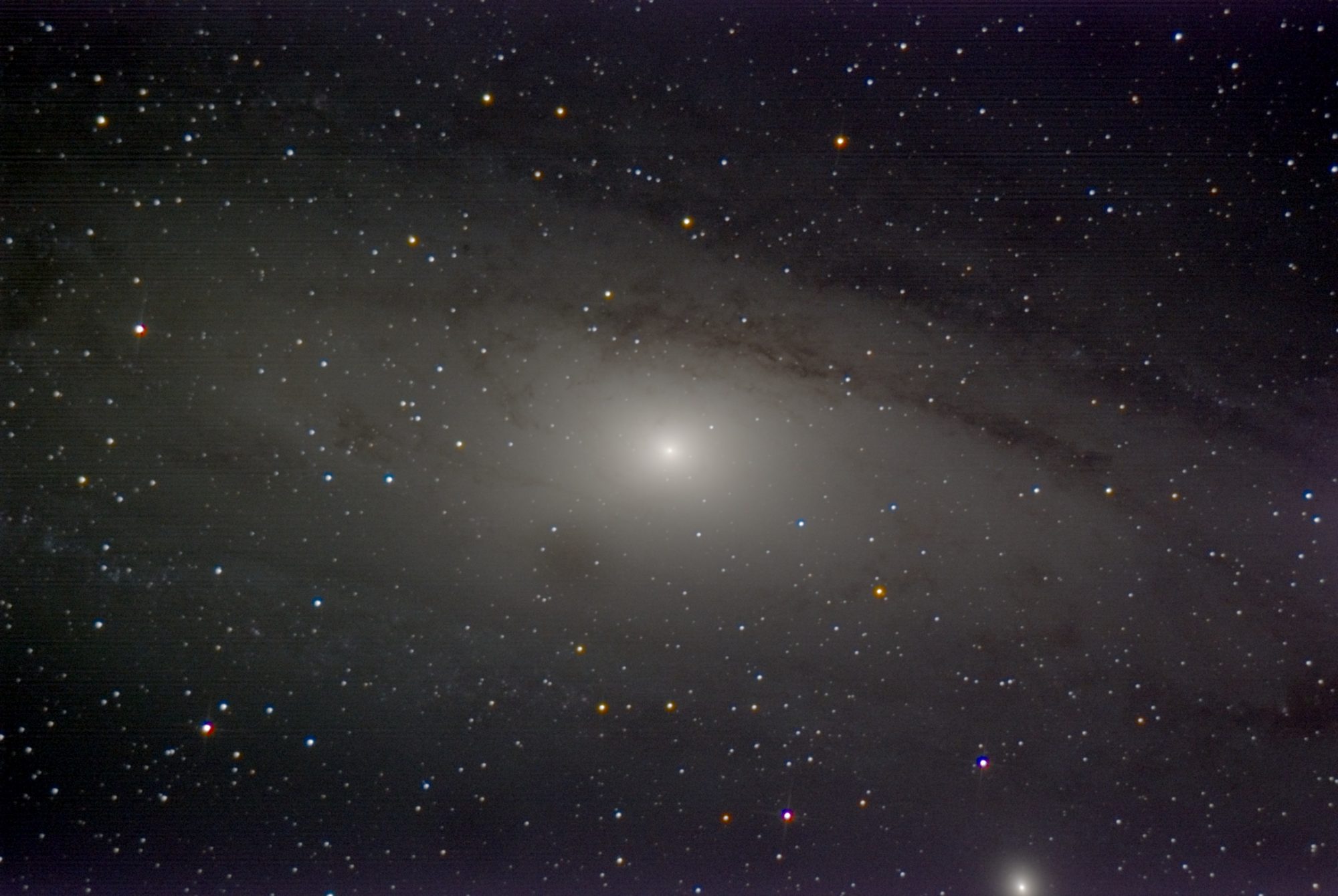
What my 150 mm telescope and a small camera got from a back garden, 17 October 2026. Your eyes will see far less. In the diary Galaxy · eyes
Andromeda Galaxy (M31)
The nearest big galaxy to ours, 2.5 million light years away, and coming our way.
To the eye in a dark sky, a faint smudge; binoculars show its bright core; a camera shows the dust lanes.
Best at 7:55 pm, 62° up in the east.
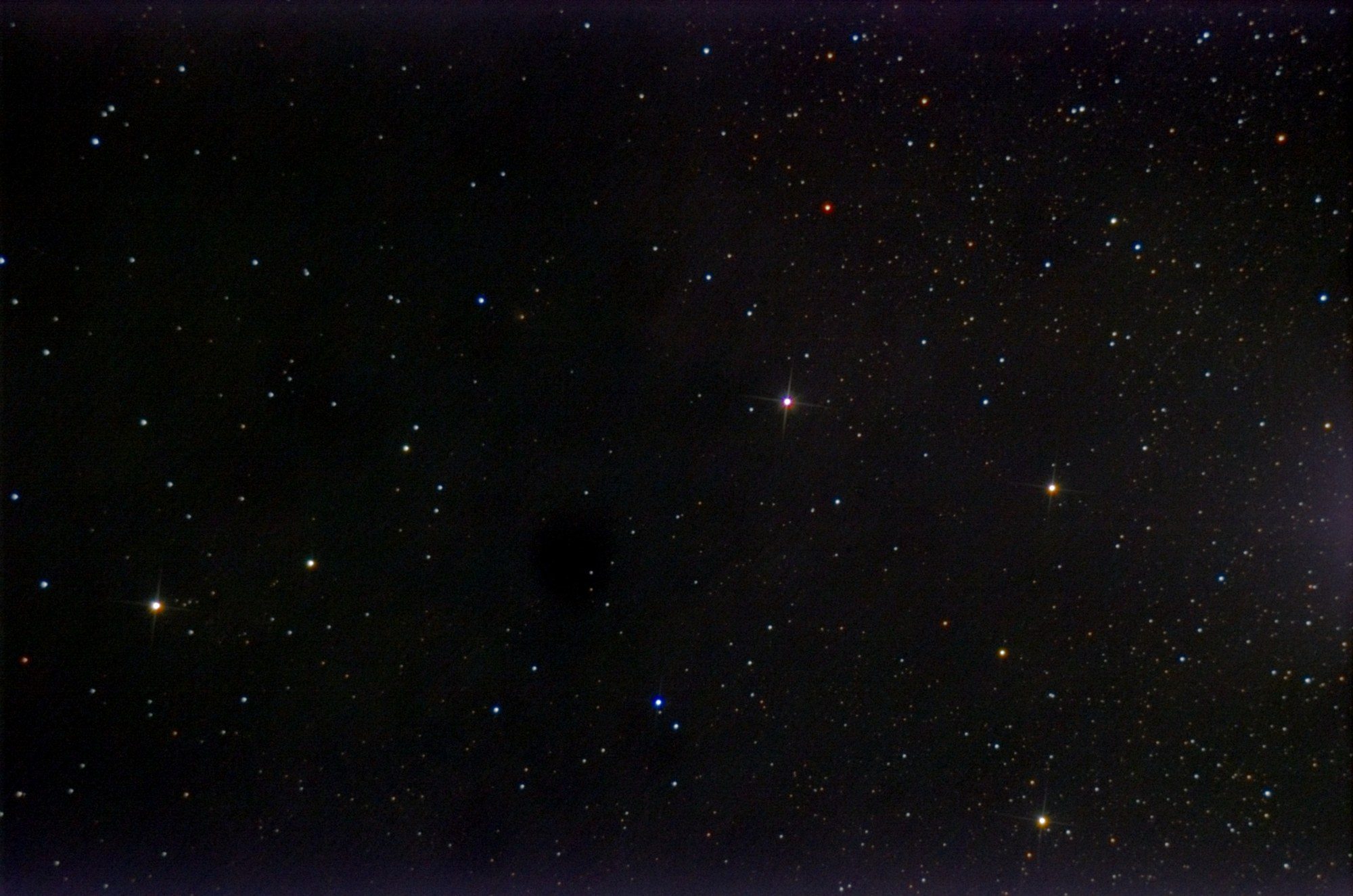
What my 150 mm telescope and a small camera got from a back garden, 15 October 2026. Your eyes will see far less. In the diary Nebula · eyes
North America Nebula NGC 7000
Best at 7:00 pm, 84° up in the north-west.
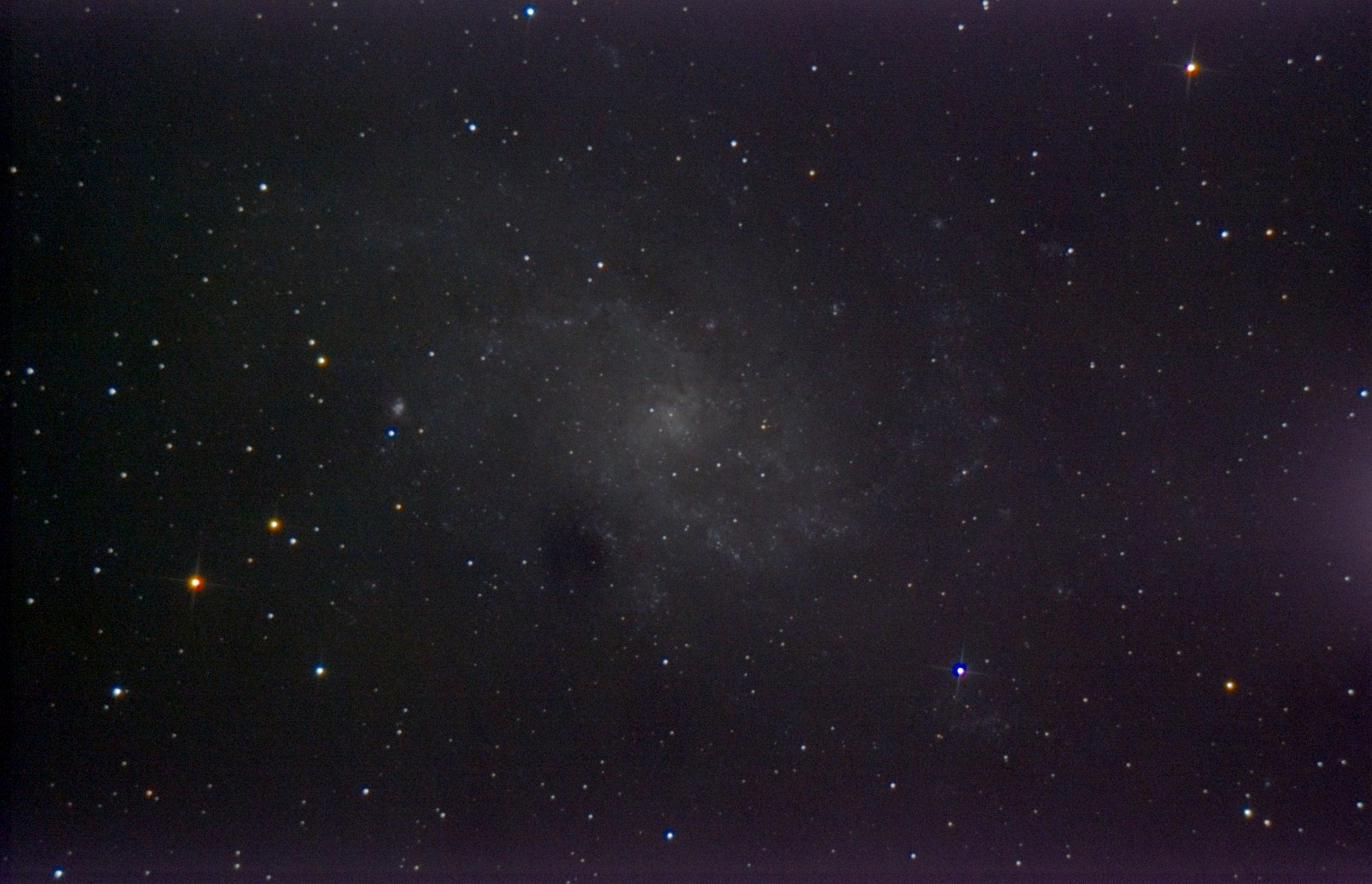
What my 150 mm telescope and a small camera got from a back garden, 15 October 2026. Your eyes will see far less. In the diary Galaxy · eyes
Triangulum Galaxy (M33)
Best at 7:55 pm, 49° up in the east.
Open cluster · eyes
h Persei Cluster NGC 869
Best at 7:55 pm, 48° up in the north-east.
Open cluster · eyes
chi Persei Cluster NGC 884
Best at 7:55 pm, 47° up in the north-east.
Worth pointing a telescope at
865 catalogue objects climb above 20° in the dark tonight. These are the most rewarding, easiest first. "Estimated" means the brightness per square arcsecond is worked out from size and magnitude.
| Object | Best | Where | With | Next good chance |
|---|---|---|---|---|
| Pelican Nebula IC 5070 · nebula · estimated | 7:00 pm | 83° north-west | small telescope | Thu 5 Nov, 10:00 pm to 12:00 am, forecast cleardark and high tonight too, but cloud forecast |
| Barbell Nebula (M76) · planetary nebula · estimated | 7:55 pm | 53° north-east | small telescope | Thu 5 Nov, 10:00 pm to 5:15 am, forecast cleardark and high tonight too, but cloud forecast |
| Ring Nebula (M57) · planetary nebula · estimated · in the diary: 1 night | 7:00 pm | 60° west | small telescope | Sun 8 Nov, 7:00 pm to 9:15 pm, forecast cleardark and high tonight too, but cloud forecast |
| Copeland's Blue Snowball NGC 7662 · planetary nebula · estimated | 7:55 pm | 76° east | small telescope | Thu 5 Nov, 10:00 pm to 1:55 am, forecast cleardark and high tonight too, but cloud forecast |
| Bubble Nebula NGC 7635 · nebula · estimated | 7:55 pm | 66° north | small telescope | Thu 5 Nov, 10:00 pm to 1:55 am, forecast cleardark and high tonight too, but cloud forecast |
| Blinking Planetary NGC 6826 · planetary nebula · estimated | 7:00 pm | 70° north-west | small telescope | Sun 8 Nov, 7:00 pm to 11:00 pm, forecast cleardark and high tonight too, but cloud forecast |
| Cat's Eye Nebula NGC 6543 · planetary nebula · estimated | 7:00 pm | 52° north-west | small telescope | Sun 8 Nov, 7:00 pm to 10:25 pm, forecast cleardark and high tonight too, but cloud forecast |
| Veil Nebula NGC 6960 · nebula · estimated | 7:00 pm | 78° south-west | larger telescope | Sun 8 Nov, 7:00 pm to 11:05 pm, forecast cleardark and high tonight too, but cloud forecast |
The next seven nights
| Night | Longest clear spell | Moon | Galaxies | Planets | Forecasts |
|---|---|---|---|---|---|
| Tue 3 | 7:00 pm to 8:00 pm (1 h) | 25%, 3.2 h in the dark | Poor | Good | 2 of 4 centres clear it at best |
| Wed 4 | none | 17%, 2.1 h in the dark | Possible | Possible | 1 of 4 centres clear it at best |
| Thu 5 | 10:00 pm to 2:00 am (4 h) + 2 more | 10%, 1.0 h in the dark | Good | Possible | 2 of 4 centres clear it at best |
| Fri 6 | none | 4%, 0.0 h in the dark | Possible | Possible | 1 of 4 centres clear it at best |
| Sat 7 | 10:00 pm to 6:00 am (8 h) | 1%, 0.0 h in the dark | Good | Possible | 3 of 4 centres clear it at best |
| Sun 8 best for galaxies | 7:00 pm to 6:00 am (11 h) | 0%, 0.0 h in the dark | Good | Possible | 3 of 4 centres clear it at best · a rough guide |
| Mon 9 | 7:00 pm to 2:00 am (7 h) | 1%, 0.0 h in the dark | Good | Possible | the centres disagree on the details · a rough guide |
Coming up
The next 30 days
- 5 Nov Southern Taurids visible from here about 6 an hour from here at best; the peak itself is in daylight here, so watch the nights either side
- 7 Nov 5:45 am The Moon and Venus close together not visible from here not both up while it's dark
- 9 Nov 1:55 am New Moon visible from here No moonlight: the darkest nights of the month for faint things.
- 12 Nov Northern Taurids visible from here about 5 an hour from here at best; the peak itself is in daylight here, so watch the nights either side
- 15 Nov 8:40 pm Mars and Jupiter close together visible from here 1.2 degrees apart, in the east
- 17 Nov 6:45 pm Leonids visible from here about 14 an hour from here at best
- 20 Nov 6:30 pm Mercury at its greatest elongation visible from here 20 degrees from the Sun, its best showing for months.
- 22 Nov Alpha Monocerotids visible from here variable; the peak itself is in daylight here, so watch the nights either side
- 24 Nov 10:00 am Full Moon visible from here Bright moonlight all night: a poor week for faint galaxies, fine for the Moon itself.
- 25 Nov 5:40 pm Uranus at opposition visible from here Up all night and at its biggest and brightest for the year.
- 30 Nov 3:25 am The Moon and Jupiter close together visible from here 1.1 degrees apart, in the south
- 30 Nov 11:55 am The Moon and Mars close together visible from here 3.0 degrees apart, in the south
- 2 Dec Phoenicids visible from here variable
- 3 Dec 12:00 pm Venus at its greatest elongation visible from here 42 degrees from the Sun, its best showing for months.
Later this year
- 7 Dec Puppid-Velids not visible from here the radiant doesn't climb above 20 degrees in darkness from here
- 9 Dec Sigma Hydrids visible from here about 6 an hour from here at best
- 14 Dec 9:00 am Geminids visible from here about 149 an hour from here at best; the peak itself is in daylight here, so watch the nights either side
- 6 Feb 11:00 am Annular solar eclipse local visibility not checked the Sun is up; whether you're in the eclipse's zone isn't worked out yet NASA map
- 20 Feb 6:14 pm Penumbral lunar eclipse local visibility not checked the Moon is right on the horizon then
- 18 Jul 12:04 pm Penumbral lunar eclipse not visible from here the Moon is below the horizon then
- 2 Aug 6:07 am Total solar eclipse not visible from here the Sun is below the horizon then
- 17 Aug 3:14 am Penumbral lunar eclipse visible from here The Moon is up at greatest eclipse. A penumbral eclipse is only a faint shading of the Moon.
Add these to your calendar (a feed for this 11 km square; big events only, never weather windows). Showers from the IMO 2026 calendar; eclipses from NASA; the rest worked out here.
Worth knowing about
Exploding stars
- SN 2026sqf in NGC 3310, type Ia-CSM: magnitude 12.8 on 2026-10-28 (it peaked at 11.2). Up from here tonight, 59° at best: a job for a camera on a telescope.
- SN 2026aaiv in NGC 7331, type Ia: magnitude 14.3 on 2026-10-26 (it peaked at 11.5). Up from here tonight, 84° at best: a job for a camera on a telescope.
- SN 2026afsg in UGC 7012, type Ib/c: magnitude 15.5 on 2026-10-23 (it peaked at 15.5). Up from here tonight, 39° at best: a job for a camera on a telescope.
From the Rochester list of bright supernovae.
Stars that need watching
244 AAVSO alerts and campaigns are up in the dark from here tonight. They want measurements, usually with a camera and filters.
- 108 Her (ELL) · priority: wanted in Spectroscopy, every 3 days. Alert Notice 859 https://www.aavso.org/aavso-alert-notice-859
- 18 Vul (ELL) · priority: wanted in Spectroscopy, every 3 days. Alert Notice 859 https://www.aavso.org/aavso-alert-notice-859
- 1RXS J213344.1+510725 (DQ) · priority: wanted in V, Visual, every 3 days. Alert Notice 753 https://www.aavso.org/aavso-alert-notice-753
- 1RXS J233801.0+430852 (NL/VY) · priority: wanted in B, Spectroscopy, V, Visual, every 3 days. see Alert Notice for when B is requested
- 2MASS J05144393-0848064 (variable) · priority: wanted in R, V, every 0.1 days. Alert Notice 585 https://www.aavso.org/aavso-alert-notice-585
From the AAVSO Target Tool.
Comets
- 107P/Wilson-Harrington, magnitude about 9.2: not up in the dark from here tonight. 0 estimates this week: not enough to say.
- P/2016 BA14 (PANSTARRS), magnitude about 11.4: not up in the dark from here tonight. 0 estimates this week: not enough to say.
- 10P/Tempel, magnitude about 11.5: up from here tonight, 9:05 pm in the south. no clear change (7 estimates, scatter 0.5 mag).
From COBS, positions from JPL Horizons.
What astronomers are talking about
- Martian Polar Crater Ice Shifts with Seasonal Frost
“The planet Mars shares many landforms and weather patterns with the Earth, including changing seasons, volcanoes, canyons, dust storms and dust devils, and water ice. But one feature that Earth and Mars share among the…” Universe Today
- DPS 58: Days 3 and 4
“Days 3 and 4 of the 58th Division for Planetary Sciences meeting brought insights from subsurface ice on Mars, discoveries of Neptune trojans, and stories of advocacy successes. The post DPS 58: Days 3 and 4 appeared…” AAS Nova
- This Ancient Meteorite Hints at Mars' Warm, Wet Past
“Ancient Martian meteorites are like time-capsules from the planet's past. They're delivered to us by impacts that launch them into space, where some of them find their way to Earth. One recently discovered meteorite…” Universe Today
- Four Cold Giant Planets Discovered by High-Cadence Microlensing Surveys
“Cheongho Han et al 2026 AJ 172 110 Four giant planets with masses of 0.2–2.5 Jupiter masses, orbiting hosts of 7–60% the mass of the Sun, have been discovered using microlensing; all the planets appear to lie beyond the…” AAS Nova
- Multimessenger Constraints on the Central Engine in SN 2023ixf: Neutron Star or Black Hole?
“Maryam Aghaei Abchouyeh et al 2026 ApJ 1006 212 The lack of detected gravitational waves associated with the supernova SN 2023ixf suggests that the event birthed a neutron star rather than a black hole, and the…” AAS Nova
My telescope, in Ballymoney, Northern Ireland
From its own planner: Marginal; 2 clear hours from 05:00; best targets Jupiter, Bode's Galaxy, Pleiades. Watch it live when it’s imaging.
Worked out for Columbus, US at 1:40 pm on 3 November in 0.73 s.
This week, everywhere
The sky this week, Tuesday 3 November 2026: Southern Taurids meteor shower on 5 November; Northern Taurids meteor shower on 12 November; the Moon and Venus close together on 7 November; Mars and Jupiter close together on 16 November; the brightest supernova is SN 2026sqf in the galaxy NGC 3310, at magnitude 12.8.
Updated 18:40 UTC, 3 November. Meteor showers from the International Meteor Organization, eclipses from NASA, supernovae from the Rochester list, comets from COBS with JPL Horizons positions, planets worked out here. Every event this month and this year.