A night of patrols, and a house in the way
The night of 1 to 2 November: a camera that kept jamming made to recover by itself, a hand focus and a polar alignment worked down to 0.6°, nova patrols of Andromeda and Triangulum with nothing new found, an exoplanet transit lost behind the corner of the house, and a plan that learned to change while it ran.
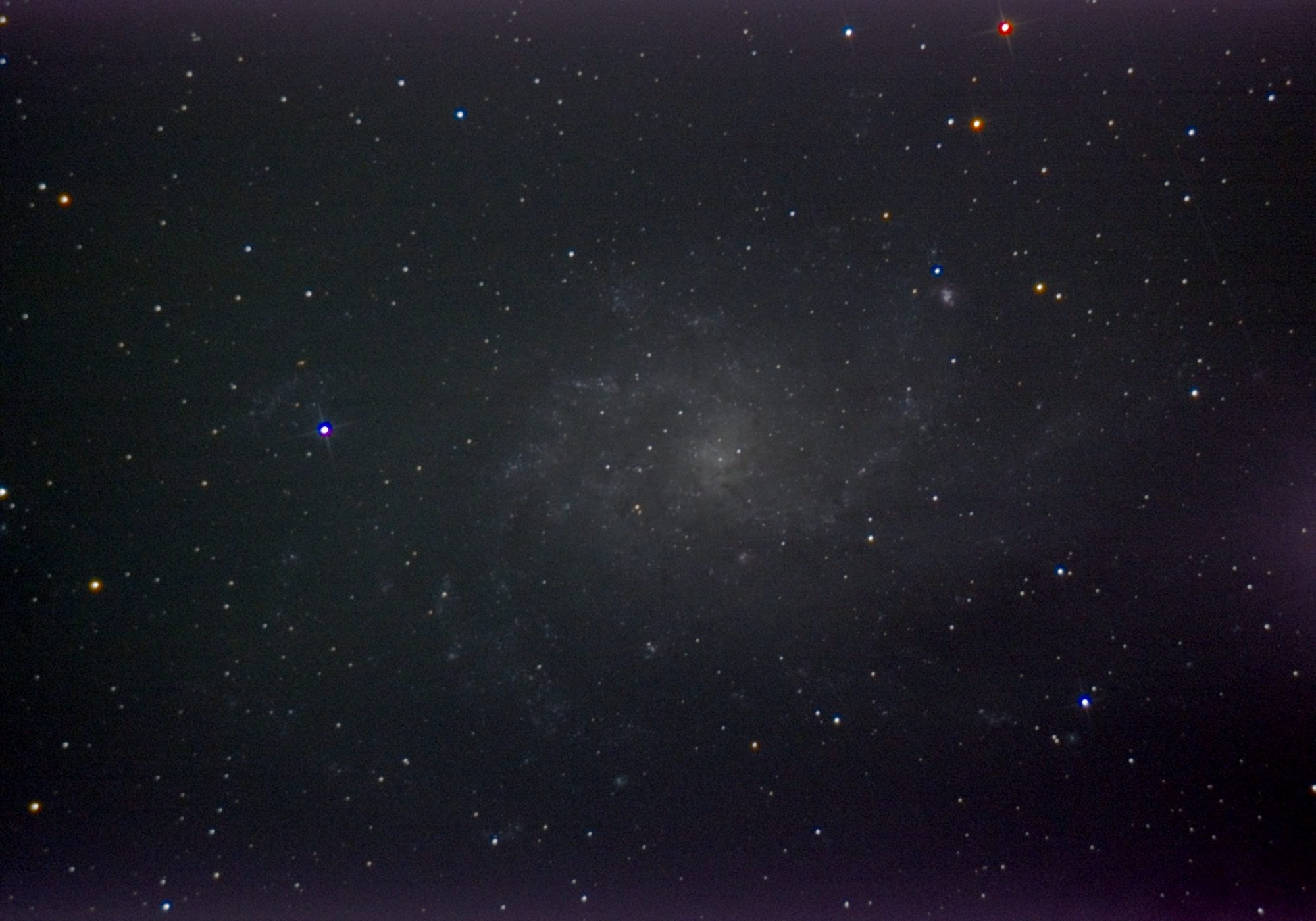
Shot 1 to 2 November, between 19:00 and 06:00, a back garden in Northern Ireland.
The camera
The evening started where the last few have: the camera still sends some long frames early at its fast setting, and at the slow one it sometimes stops sending anything at all. This time I didn’t have to go out and pull the plug. Claude can now cut the camera’s power from the laptop, and once that worked it was built into every run: a jammed camera is reopened, or switched off and on, and the frames carry on in the same session instead of starting again from nothing. By the end of the night it had happened several times and nobody had to touch it. The hub went back to Amazon; the camera now runs on a single lead straight into the laptop.
Focus and the pole
The motor focuser turned but the knob didn’t, so I focused by hand, with Claude reading out how sharp the stars were: 1.8 against a usual 2.3. Then the polar alignment, which turned into a proper study of the bolts. A half turn moves the mount about half a degree, but about a quarter of a turn is lost every time you change direction. It finished 0.6° from the pole, which is smaller than a star in a 16-second frame.
The patrols
The plan was discovery first. Andromeda (M31) was searched for a nova: a star that wasn’t there in the reference picture. The first search flagged seven spots, and the telescope went back for a second look. None of them were there again, so they were leftovers from the subtraction, not new stars. Triangulum (M33), above, had the same result: nothing new. That’s the usual answer, and the point is to keep asking.
After that came M81 and M82 together, to become the reference for future searches of that field, and SN 2026sqf, a supernova in NGC 3310.
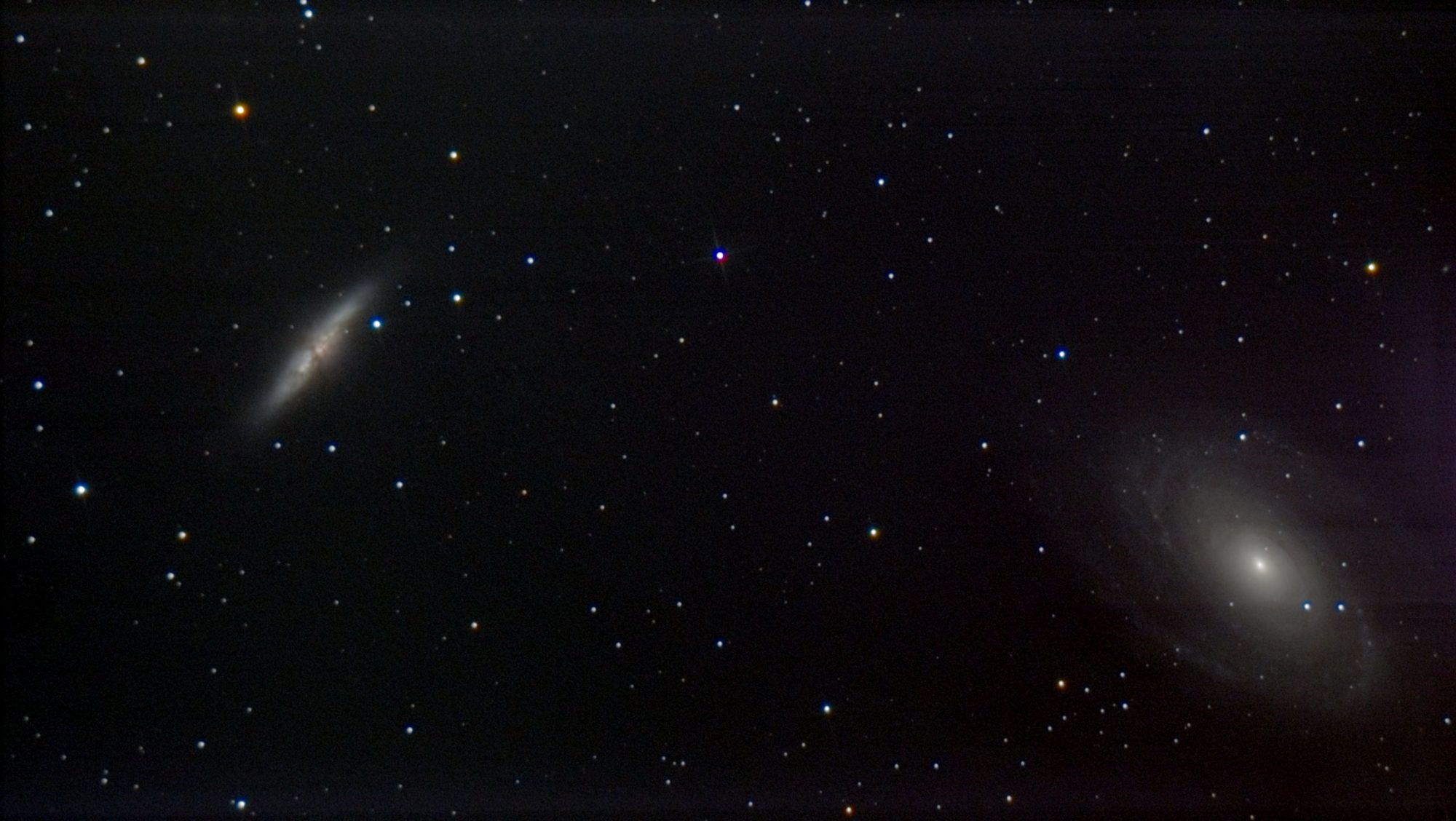
Bode’s Galaxy (M81, right) and the Cigar Galaxy (M82, left), from just over an hour of 16-second frames.
The house
The exoplanet transit, TOI-2046 b, a young hot Jupiter crossing its star, never happened for us. From this spot the corner of the house sits right across the north-north-west, high up, and the planet’s whole transit ran behind it. I saw it before the computer did: “i think the scope may be pointing at the house”. The corner is now in the planner, and every planned step is checked against it before it runs.
What changed
Plans go wrong at night, and changing one used to mean stopping everything. Now steps can be skipped, moved or added while the night runs. Each run ends on its own clock with its picture kept, a patrol lets the telescope go while its search runs, and when a step is lost the planner offers the best thing to fill the time.